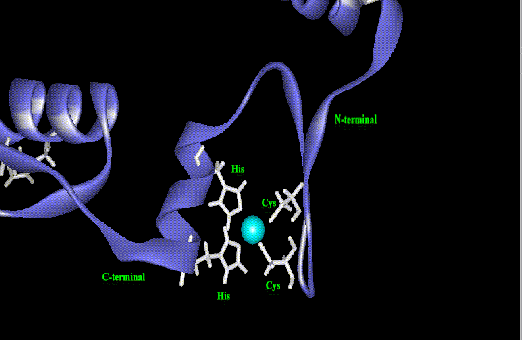
Although the detailed mechanism of transcriptional activation is not fully understood, physical interactions between proteins appear to be the major event of the activation. The zinc finger DNA-binding motif regulates gene expression through the coordination of zinc (II) ions by two cystines and two histines ligands or by four cystine ligands (Argos, 1985; Blumberg 1987). By associating with amino acids within their polypeptide chains, the zinc finger motifs of the transcription factors induce conformational changes in the protein. The Zn2+ ions connect the C-terminal histine residues and the N-terminal cystine residues together in a single finger motif to form a globular domain in order to stabilize the motif structure and bind DNA properly (Figure 3). Zinc binding, therefore, is essential for transcription factors to recognize and bind their target DNAs. This then paves the way for the RNA polymerase to initiate transcription.
Figure 3. A closed view of a singal zinc finger motif. Two cystines from the b-ribbon region and two histines from the a-helical region coordinate a central zinc ion (light blue). The zinc finger folds into a hand shape compact structure, with the zinc and the C-terminus at the base of the hand and the N-terminus extending like the thumb toward the fingertips.
Differences in the Zn2+-liganding domain allow the zinc finger motife to activate various gene functions in the system. For example, the Cys2-His2 zinc finger proteins in Drosophila are responsible for the establishment of the body segments (Redemann, 1988). In contrast, the Cys2-Cys2 zinc fingers in the receptors of the steroid hormone family control both metabolism and development of eukaryotes (Muller, 1997). Thus, based on various Zn2+-liganding domain of the gene regulatory proteins, zinc finger motifs are classified into three common groups: Cys2-His2 zinc fingers, Cys2-Cys2 zinc fingers, and binuclear Cys6 zinc fingers (Voet, 1995).