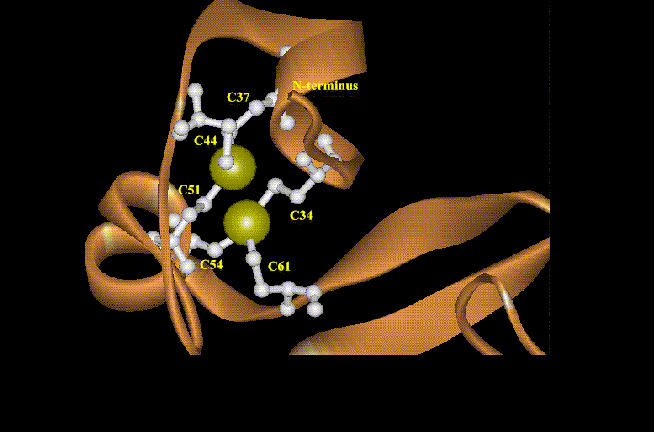
Cys6 zinc fingers is first discovered in the GAL4 DNA-binding protein family which contains six invariant cystine residues (Figure 9). The yeast protein GAL4 is a transcription factor stimulated by the expression of several genes which encode galactose-metabolizing proteins. It contains 881 amino acid residues and binds to a double stranded DNA as symmetric dimer (Figure 10). Each subunit folds into three distinct modules: a compact Zn2+-liganding domain binds specific sequences of DNA, an extended linker, and a short a helical dimerization element. Although there are six cystine residues in the Zn2+-liganding domain, only four of the six associate with two zinc ions.
Figure 9. A ribbon structure of a single subunit of pyrimidine pathway regulator 1 (PPR1) DNA-binding domain with its two Zn2+ ions (yellow). Six cystine residues are contained in Cys6 zinc-finger motif (residues 29 - 123). PPR1 has a similar protein structure as GAL4. They were both discovered in the yeast proteins. Compare this structure with Figures 6 and 3.


Figure 10. The X-ray structure of the GAL4 DNA-binding domain in complex with a 19-bp DNA. The dimeric protein shown in different colors binds to theDNA shown in the tube form. This view are along the complex's twofold axis (top) and turned 90º with the two fold axis horizontal (bottom). Residues 8 - 40 are included in Zn2+-liganding domain . Residues 41 -49 form an extended linker and a short a helical dimerization element is composed by residues 50 to 64 (Voet, 1995).
GAL4 protein is often coupled with LacZ protein (bacterial b-galactosidase) as a detector for genetic manipulation. For example, in the manipulation of eyeless gene, GAL4 was inserted randomly into the Drosophila genome which contained an eyeless and LacZ reporter genes. When the GAL4 gene was activated by the Zn2+ binding in an imaginal disc of Drosophila, the transcription factor of the GAL4 would then activate not only the LacZ reporter gene but also the eyeless gene (Gehring, 1992). A variety of evidence indicates that metal binding is essential to the GAL4 transcription factor to recognize specific DNA-binding site. When metal ions, such as Zn2+, Cd2+, or Hg2+, are absent, there is no DNA binding activity detected from the proteins.